Aligning clinicians & supply chain in pursuit of higher value care delivery
Clinicians and supply chain have historically functioned independently of one another, with the latter driven primarily by cost. Conversely, physicians have had autonomy in product selection, and cost was not always part of the equation, says Aashish Shah,

M.D., J.D., Senior Vice President & Chief Medical Officer with HealthTrust. “These disparate ways of working have led to high costs, unnecessary product variation and a considerable amount of waste in healthcare.”
The transition from fragmented, cost-focused silos toward a symbiotic approach to patient care and procurement is a work in progress for most providers, says Dr. Shah, “because it is a fundamental shift in how the majority have operated.” In fact, in a 2024 study by Global Healthcare Exchange (GHX) and the Association of Healthcare Value Analysis Professionals (AHVAP), 85% of organizations surveyed reported less-than-strong physician engagement in clinical integration and value analysis initiatives.
WHAT’S THE DIFFERENCE?
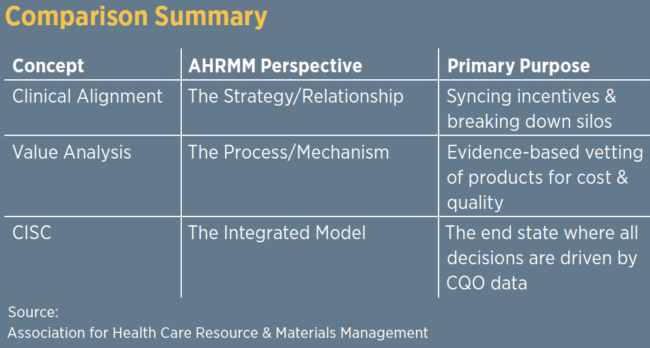
Within the framework of its Cost, Quality & Outcomes (CQO) movement, AHRMM differentiates these concepts as progressive stages & methods:
- Clinical Alignment brings everyone to the table. It is the foundational state of relationship-building & goal-sharing required for integration.
- Value Analysis evaluates the tools on the table. It is the primary mechanism or process used to achieve a clinically integrated supply chain.
- Clinically Integrated Supply Chain is the systematic, efficient & evidence-driven process for selecting, purchasing & using those tools to improve patient care. In other words, an interdisciplinary partnership designed to deliver patient care with the highest value.
A new way of doing business
The silos of the past no longer position health systems for positive outcomes in today’s financially volatile environment. Hospital mergers and closures continue to dominate the headlines. In order to survive, providers are seeking solutions that encompass the realities of care delivery as well as the budgetary impact.
“Clinical alignment is no longer optional,” Dr. Shah suggests, but instead is “essential to a health system’s financial stability and operational resilience,” pointing to a direct connection between the quality of care and the costs of delivering it.
Healthcare providers must take steps to improve performance to protect eroding margins, including expense management, reduction of clinical variation and improved efficiency.
At the core of those initiatives is physician engagement and alignment, meaning clinicians and administrators reaching consensus on which products to use based on evidence, patient outcomes and cost-effectiveness.
The CQO movement
The integration of clinical excellence into sourcing and contracting decisions is not an entirely new concept. The strategic integration of supply chain, analytics and clinical outcomes entered the lexicon of healthcare terminology around 2013 when the Association for Health Care Resource & Materials Management (AHRMM) launched its cost, quality and outcomes (CQO) movement.
In creating CQO campaign awareness, AHRMM actively promoted what it called the “clinically integrated supply chain” (and corresponding acronym, CISC) around 2018. CISC is an interdisciplinary approach that aligns supply chain leaders with clinicians in pursuit of delivering higher value patient care.
While some early adopters chose to “dabble” in the benefits of a CISC, its true benefits were not well known to the majority of healthcare systems. Enter, however, new payment models—e.g., value-based care—where the focus shifted from price to a value equation that balances quality and cost.
“If they want to stay in business, providers can no longer dabble or choose not to ‘play’ at all,” says Dr. Shah. The shift in care necessitates collaboration among physicians, operational leaders, administrators and supply chain to align efforts around patient-centered care and improved outcomes.
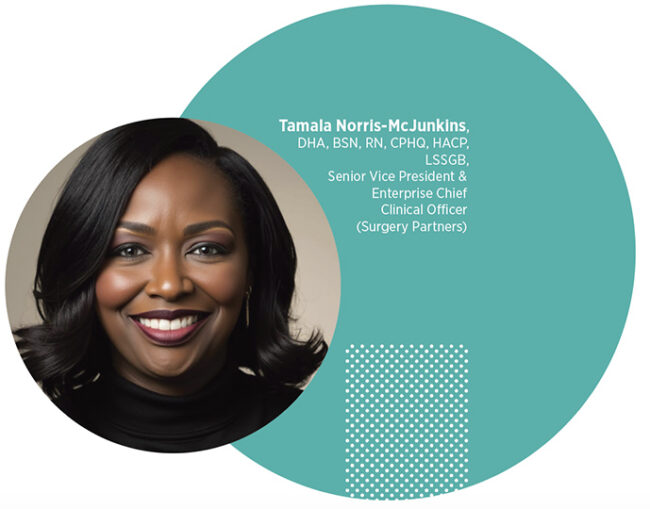
The Source recently sat down with subject matter expert members representing an acute and a non-acute care perspective. Below, Dr. Pranav Mehta (HCA Healthcare) and Tamala Norris-McJunkins (Surgery Partners) share their insights on the evolution of roles and the benefits that come from alignment to both patients and organizations.
Q: Describe how a medical leader’s role has evolved to handle both clinical care & the financial outcomes of supply ch
oices.
Dr. Mehta: “The role of a Chief Medical Officer (CMO) has expanded beyond quality and patient safety to include shaping clinical decisions that balance clinical performance, workflow impact, cost and patient outcomes. This evolution positions CMOs as essential
leaders connecting bedside care with overall healthcare performance. The evolving synergy between supply chain and CMOs over my 14-year tenure at HCA Healthcare
underscores the unique value CMOs bring in driving evidence-based utilization and physician engagement to improve quality and manage costs effectively.”
Norris-McJunkins: “Earlier in my career, everyone stayed in their lane. There were very distinct silos between managing materials and supplies versus clinical practice and care delivery. How we take care of patients has progressed over time to make sure they are receiving the right care, with the right supplies. It has evolved further into collaboration that considers how we leverage our collective strength to bring the best value to patients and provide good outcomes while effectively managing the expenses of healthcare. We have moved from a single direction of care, policies and protocols to a place where our business and operations leaders realize it is a two-way street. Now, it’s truly a partnership; a collaborative effort necessary to drive the results we’re looking for.”
Q: What about the role of value-based care in that evolution?
Dr. Mehta: “Value-based care changes conversations from price to performance. The relationship between clinicians and supply chain directors can be reframed from a gap to a connector centered on clinical value. Emphasizing evidence-based medicine and shared decision-making helps align stakeholders working to improve patient outcomes, reduce variation and justify costs.”
Norris-McJunkins: “There’s government pressure on managing costs and not passing on unnecessary expenses to patients—we must balance the ethical piece with the costs of healthcare. And that process is led from a clinical perspective because we want great outcomes. It has created more collaboration around supply spend as opposed to just purchasing for individual preferences. Multidisciplinary teams are now at the table having these discussions and determining what’s best for the patients and for the company.”
Q: What does ‘You can no longer simply contract your way out of cost,’ mean to you?
Dr. Mehta: “Contracts remain important, but pricing alone is insufficient to manage costs sustainably. Physician engagement and alignment are equally critical to reduce variation, ensure appropriate product utilization and achieve cost savings. Supply chain is integral to improving care quality and consistency. Early engagement and transparent, peer-to-peer conversations build trust and encourage participation in high-volume clinical decisions. Small improvements in these areas can yield a significant impact on outcomes and cost savings.”
Norris-McJunkins: “It’s about having the evidence, research and outcomes data to support your position. Doctors are not looking just for cost savings; they are looking for clinical efficacy. They want to ensure that they have what they need to provide the best care for their patients and that decisions are not just based off of a dollar sign. Not involving physicians creates more issues down the road that go beyond price. The collaborative approach to medical review has added even more credence as to why doctors have to be involved in these decisions—the bulk savings opportunities aren’t always the best thing for our physicians or our patients. Sometimes it does behoove us to buy a more expensive product.”
Q: Does the phrase ‘Alignment is not abrasion—it is activation,’ help to motivate a team?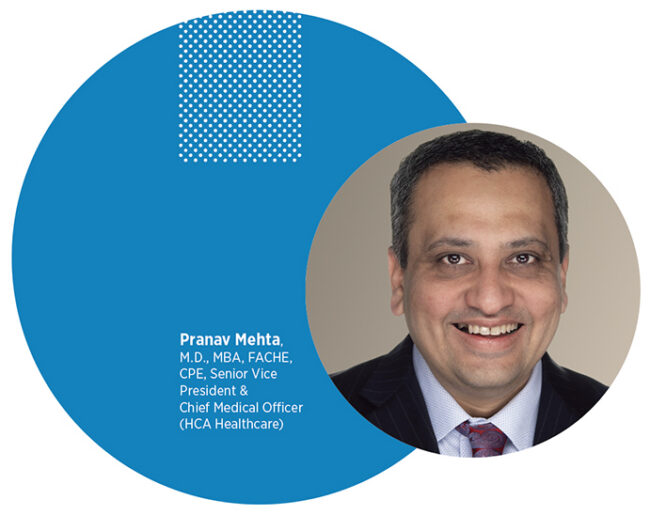
Dr. Mehta: “Alignment can be framed positively as activation—where stakeholders understand the purpose, have a voice in decisions and become engaged champions. This approach fosters ownership, accountability and momentum rather than resistance or abrasion. The best and most effective physician champions possess clinical credibility, openness to data and the ability to influence their peers. These qualities enable them to communicate and explain decisions and nuances, to build trust and to facilitate clinical integration within supply chain initiatives.”
Norris-McJunkins: “We have much better outcomes and results when our doctors and clinicians are at the table. The alignment that comes from being able to work together far exceeds anything that happened when we operated in silos. Alignment has definitely improved relationships across the organization. When we all have the same goal, there comes a unified vision in making the right decisions for the hundreds of thousands of people we care for every year. As a result of that collaboration, there comes cost savings. So it becomes a benefit to all.”
Q: Where should an organization start if it is new to clinical integration?
Dr. Mehta: “Focus on visible opportunities with strong evidence and establish transparent, physician-informed processes to build momentum. When it comes to innovative technology, there is a need to balance innovation with fiscal discipline. Decisions should be based on clinical problem-solving—improved outcomes, reduced variation and enhanced efficiency. An emphasis on targeted adoption with defined patient populations and ongoing performance monitoring is key to successful integration.”
Norris-McJunkins: “Developing a formulary that all doctors within the ASC can use is usually one of the quick wins as there are routine medicines that are utilized within an ASC. Then aligning and standardizing on more general supplies like surgical sponges or suction canisters—those that could be used with any patient. Next delving into products like blades, X-ray gowns, jackets and scrubs and how those items are cleaned, followed by instrumentation and related service agreements.”
 The path forward
Through physician engagement, data-driven decision-making and a structured approach to value analysis, progressive health systems have demonstrated how supply chain evolves from an administrative function into a strategic clinical partner.
“If done correctly, physicians are willing to get on board with supply chain transformation when they are confident their health system embodies a patients-first mindset,” says Dr. Shah. Physicians view managing costs as part of their responsibility and indicate they would like to be involved with supply chain initiatives.
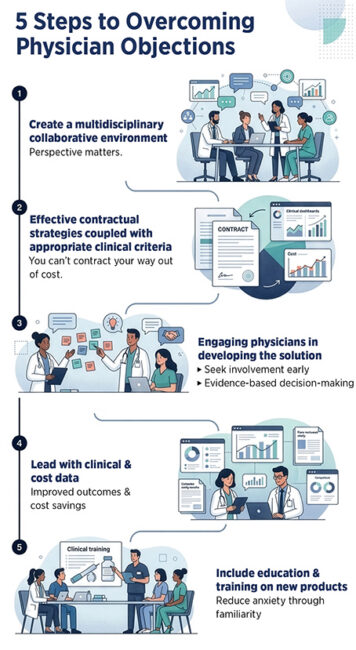
“Overcoming physician objections requires effective communication, data-driven decision-making, collaboration and the right GPO partner,” says Dr. Shah. A recent study analyzing the effectiveness of healthcare GPOs found no evidence that their reduction of supply expenses comes at the cost of the quality of care, nor by means of selective patient admission.
“HealthTrust understands the challenges of aligning physicians, managing supply chains across multiple healthcare settings and navigating the evolving landscape of value-based care,” says Dr. Shah. “Physician engagement is a positive step toward a provider’s clinical integration strategy. I encourage members to reach out to my team to discuss clinical integration as well as performance improvement initiatives that help you achieve operational excellence and longer-term financial health.”
Put HealthTrust Performance Solutions to work for your organization. Contact your HealthTrust Account Manager to start the conversation or email performancesolutions@healthtrustpg. com
Share Email Care Variation, Patient Outcomes, Physician Engagement, Q3 2026, Value-based Care